


AI is changing how people earn money. But most advice stays vague. “Use AI” is not a business plan.
This post breaks down three real paths to building income with AI. Each one has a different barrier to entry, a different upside, and fits a different kind of person. Pick the one that matches where you are right now.
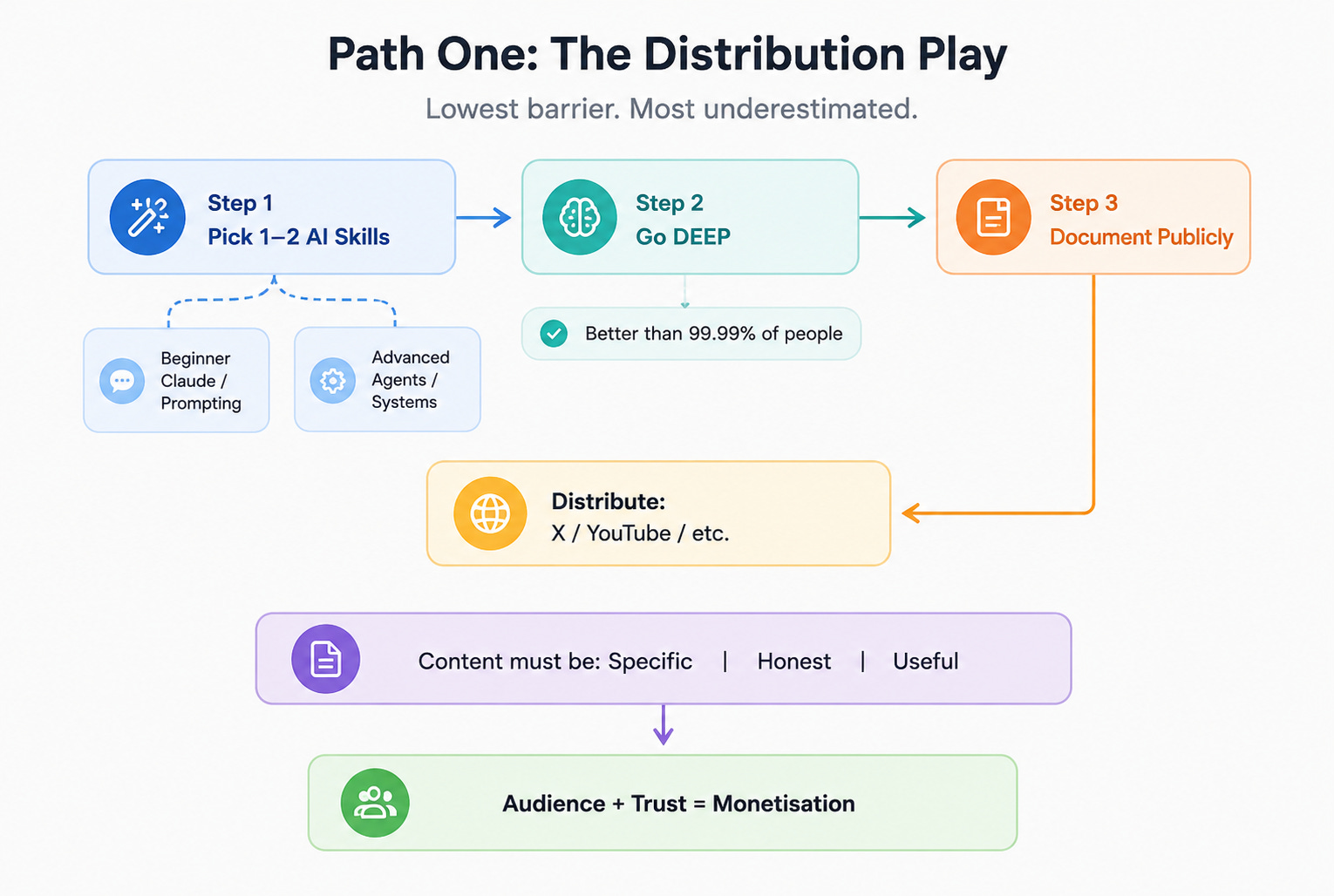
Path One: The Distribution Play
What it is: Pick one or two AI skills or tools. Learn them deeply. Then share what you learn online.
This is the lowest barrier path. It does not feel like a business at first. But it becomes one fast.
How to do it:
Choose a trending AI skill with staying power. Think: prompt engineering, Claude, agentic workflows, AI-assisted development.
Go deep. Learn it better than almost everyone else.
Document your journey publicly on X, YouTube, or wherever your audience already spends time.
Your content does not need to be perfect. It needs to be specific, honest, and useful to someone one step behind you.
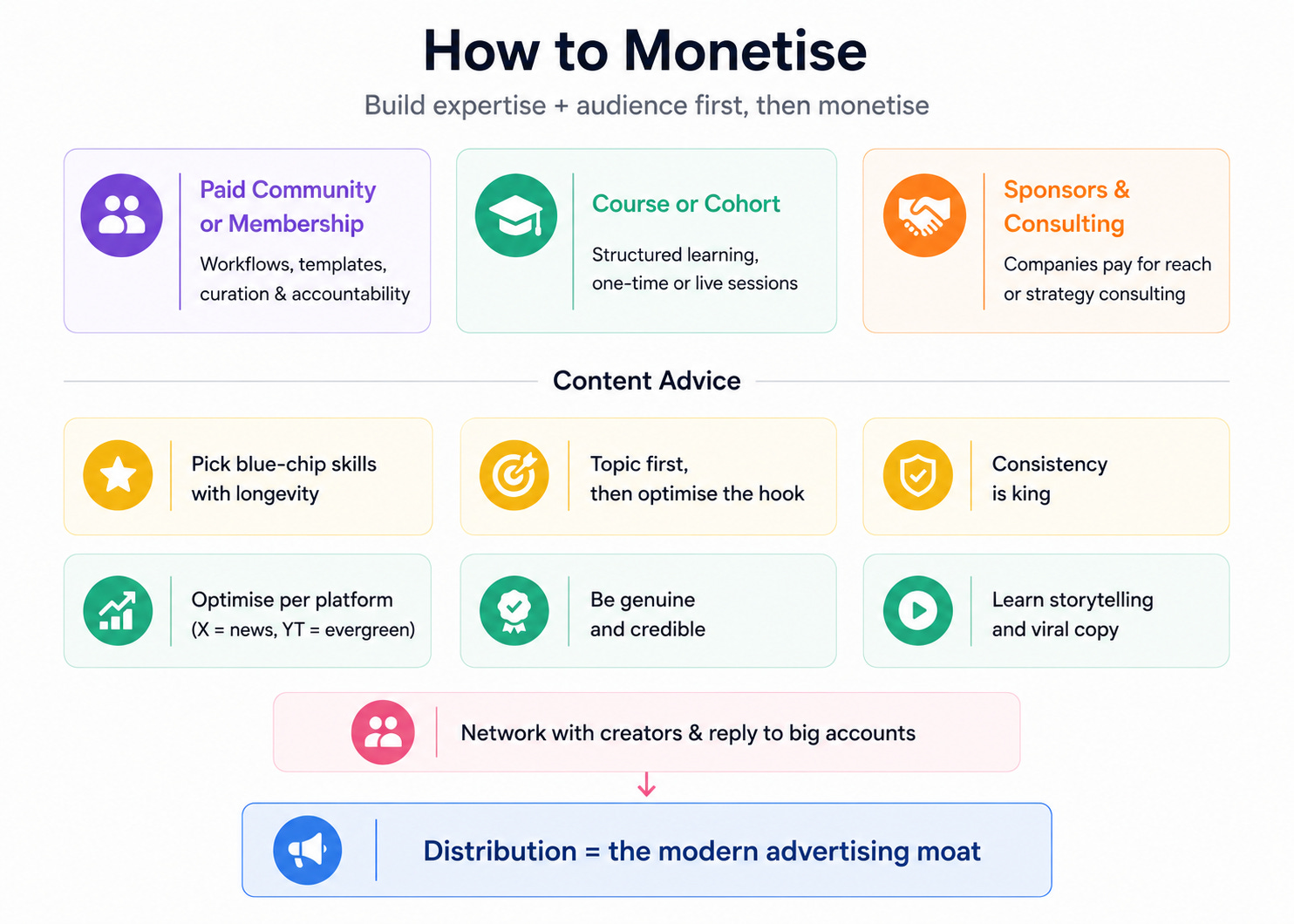
How to make money from it:
Paid community or membership where you share workflows, templates, and ongoing findings.
Course or cohort that packages your knowledge into a structured learning experience.
Sponsorships from companies that want access to your audience.
Tips that matter:
Pick a skill with longevity. Avoid tools that could become obsolete quickly.
Focus on viral topics first, then optimize your hooks.
Be consistent. Be genuine. Learn storytelling.
Network with other creators and collaborate when you can.
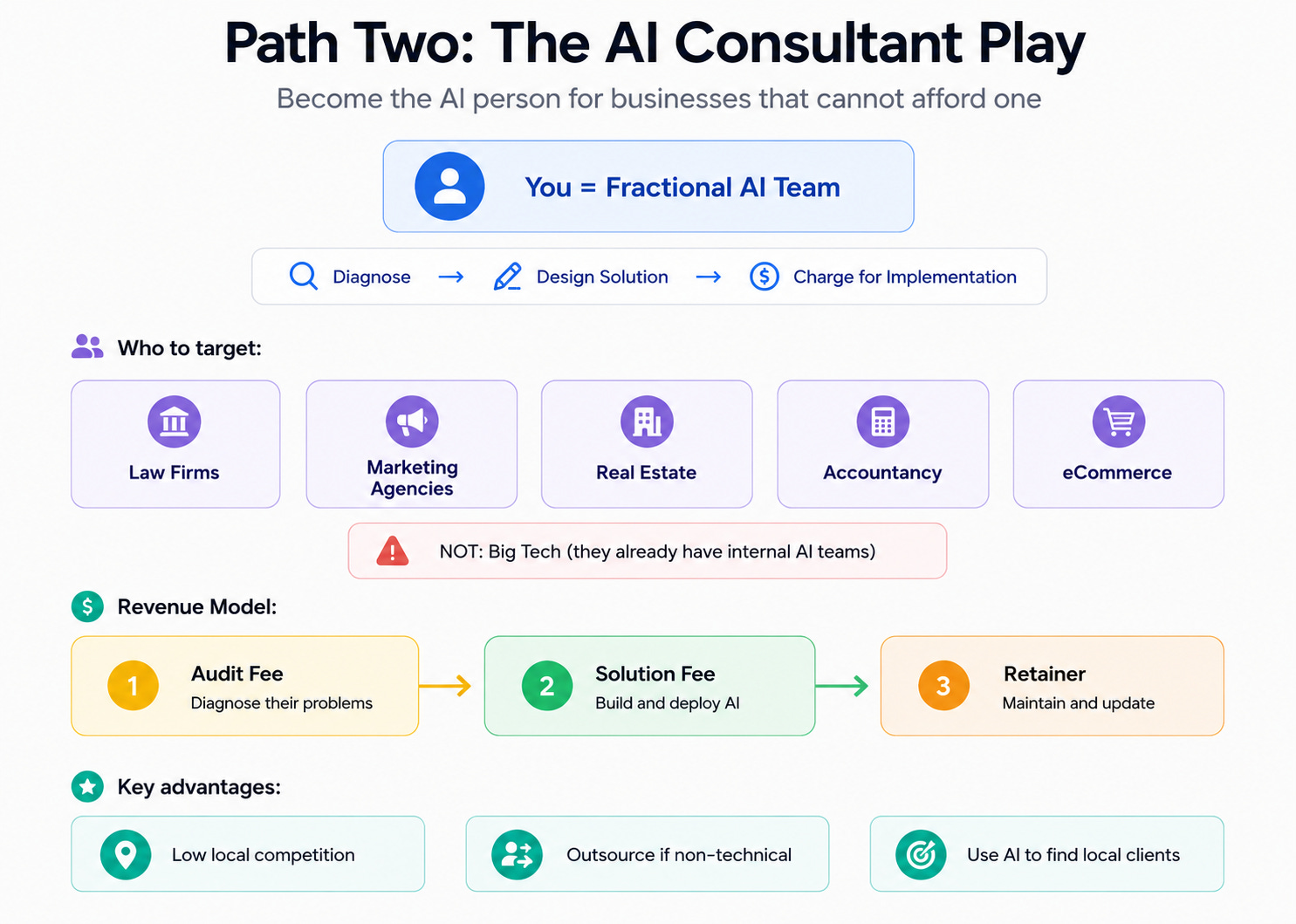
Path Two: The Consulting Play
What it is: Become the AI person for small and mid-size businesses that cannot afford a full-time AI hire.
This is the fastest path to real income for most people. The demand is massive and the supply of people who can deliver is tiny.
How to do it:
Find businesses running outdated manual processes. Think: local law firms, marketing agencies, real estate offices, accounting practices, e-commerce stores.
Diagnose where AI can save the most time in their operations.
Design and build the solution. Charge for the implementation.
This is not about telling people to “use ChatGPT more.” It is about identifying specific workflows that eat their team’s time and building AI systems to fix them.
How to make money from it:
Audit fee for diagnosing their problems.
Solution fee for building and deploying the automation.
Retainer for maintaining and updating the system over time.
Why this works:
Low competition. Most small businesses in your area have never been pitched AI.
You can outsource the technical work and focus on sales, marketing, and scaling.
Tools like Manus can help you scan for local clients that fit your criteria.
Path Three: The Product Play
What it is: Build an AI product from scratch. You own all the upside.
This is the highest ceiling path. It is also the hardest. It requires the most from you before it gives anything back.
The most important rule: Product-market fit (PMF) comes first. Always. The coolest idea in the world fails if nobody wants it.
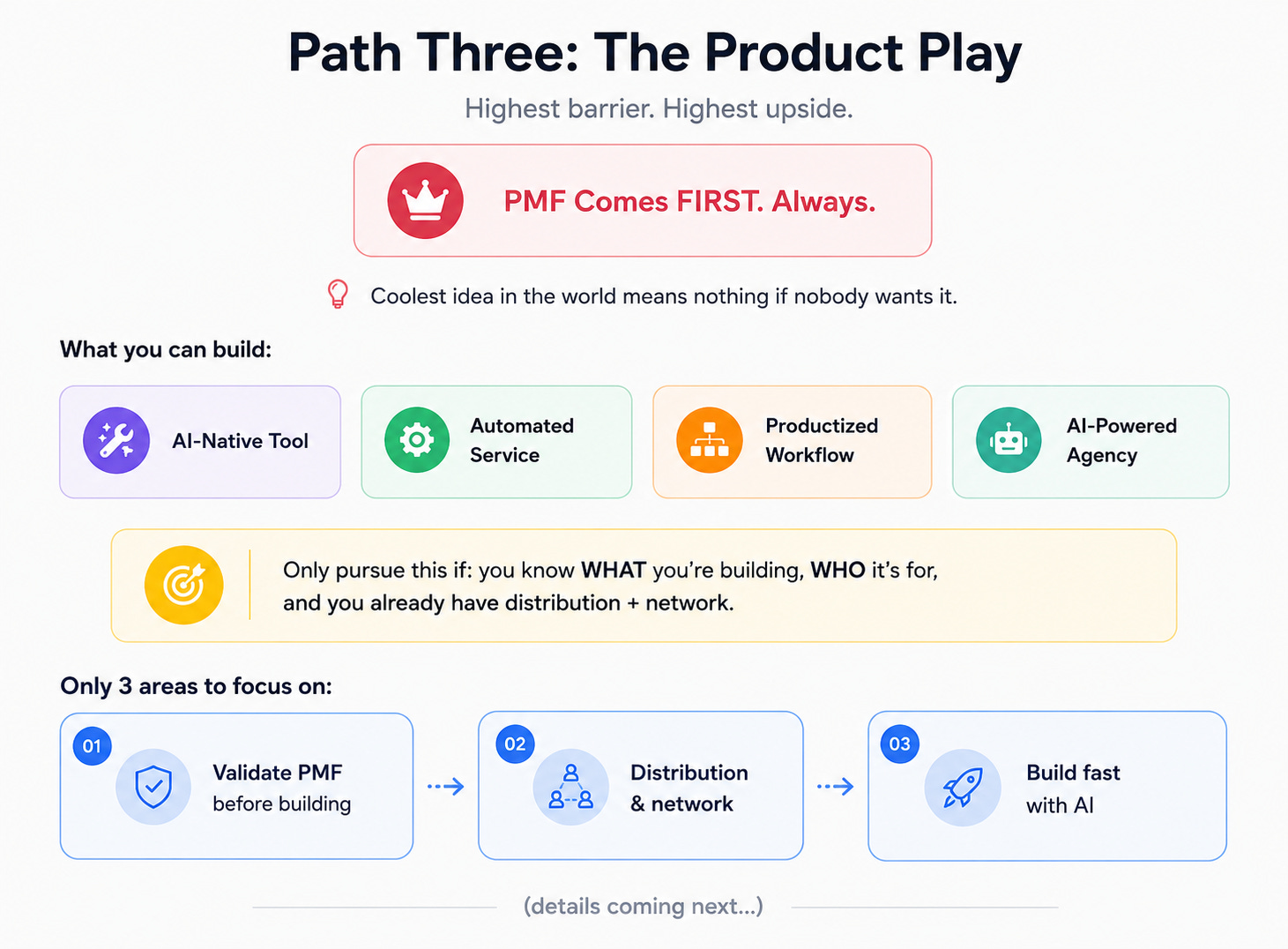
Three areas worth focusing on:
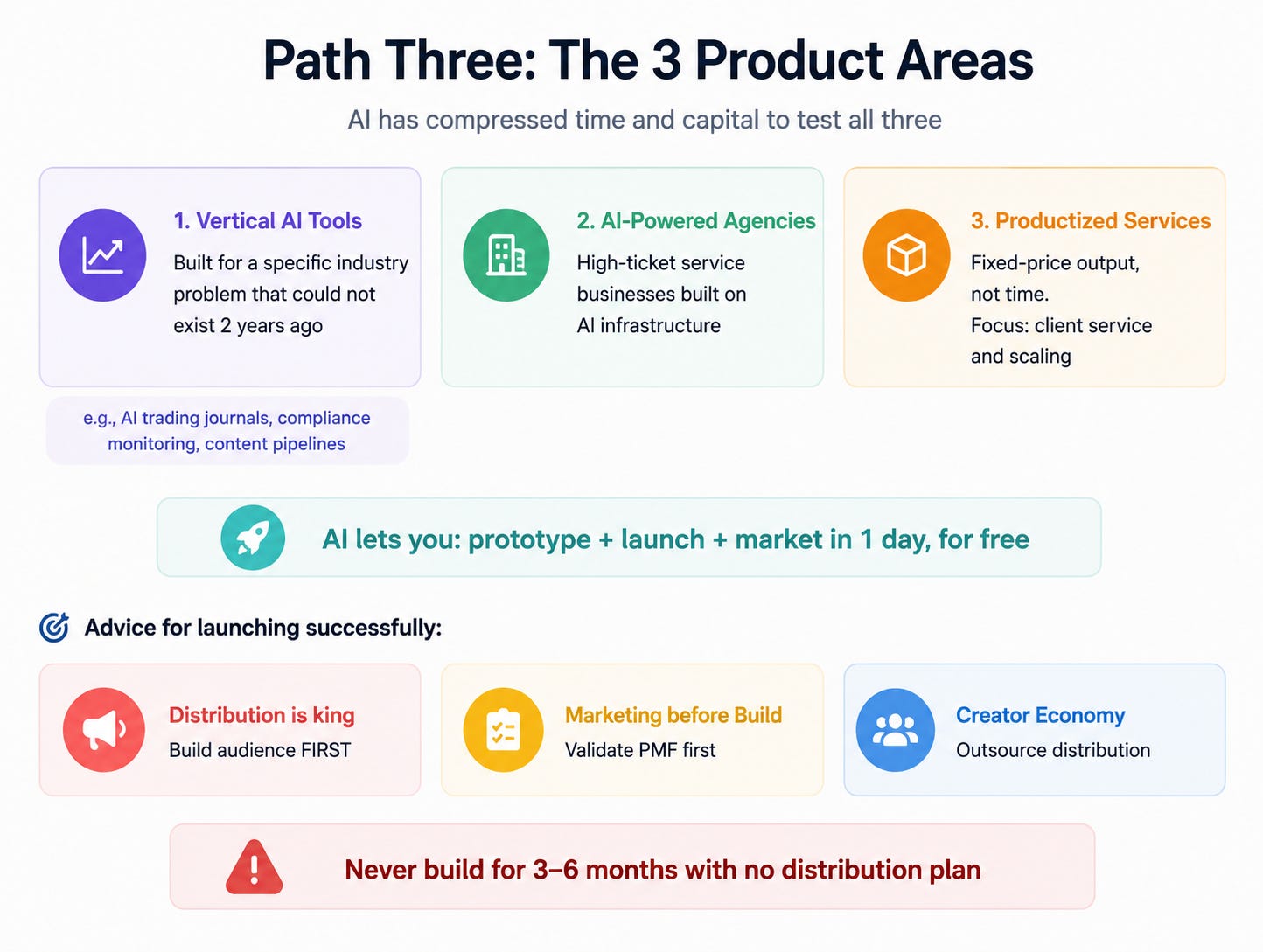
Vertical AI tools built for a specific industry problem. Examples: AI-powered trading journals, automated compliance monitoring, AI content pipelines for media companies.
AI-powered agencies that deliver high-ticket services built on AI infrastructure.
Productized services where you package an AI-delivered service at a fixed price. You sell the output, not your time.
What makes this path exciting: AI has compressed the time and money needed to test products. You can build a prototype, launch a website, and run a marketing campaign in a single day, for free.
Tips that matter:
Distribution is everything. Do not spend months building a product with no way to reach customers.
Validate the market before you build. Marketing first, then development.
Consider hiring creators or influencers to push your product if you lack your own audience.
Which Path Is Right for You?
Path One (Distribution): Best if you want a low-barrier starting point and are willing to build in public.
Path Two (Consulting): Best if you have some capital, some skills (or are willing to outsource), and ideally some sales or business experience.
Path Three (Products): Best once you are more established, can afford the risk, and ideally have already succeeded at one of the other paths.
None of these paths are easy. But each one has real upside for people willing to put in the work.

Thanks a lot Bhai.